

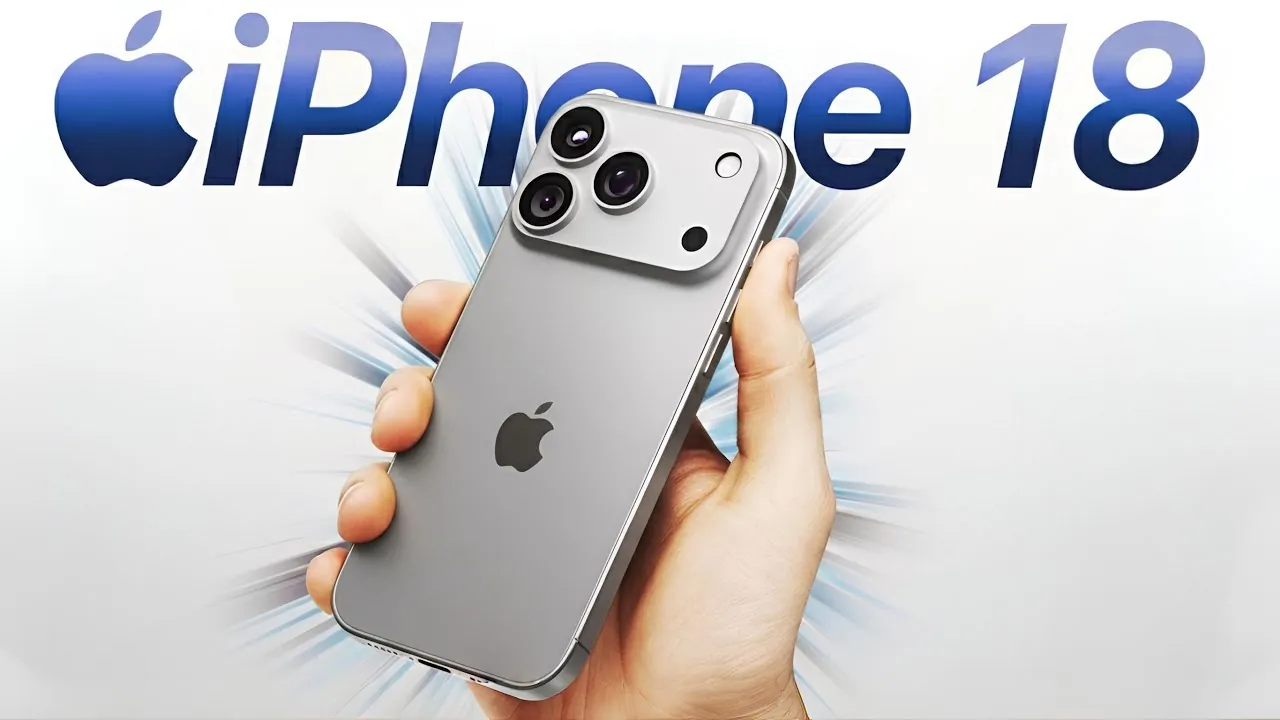
The most significant leak dominating the tech supply chain involves Apple’s transition to the 2nm process node. According to reports from TSMC’s roadmap, the Taiwanese chip giant is on track to provide Apple with the world’s first 2nm commercial processors for the iPhone 18 Pro.
-
The Power Jump: Leaks suggest the A20 Bionic chip will offer a 15% performance increase and a 30% reduction in power consumption compared to the 3nm chips used in 2025.
-
The “All-Screen” Vision: Supply chain analysts at Bloomberg indicate that the iPhone 18 Pro might finally feature Under-Display Face ID. This would replace the Dynamic Island with a simple, singular hole-punch for the camera, which is rumored to vanish entirely when viewing media.
-
Thermal Management: To handle the increased NPU loads for “Apple Intelligence 2.0,” leaks point toward a graphene thermal system, replacing the traditional graphite pads to prevent overheating during heavy AI processing.
Samsung Galaxy S27 Ultra: The 320MP Sensor War
Samsung has never been one to shy away from “Mega-specs,” and the leaks for the Galaxy S27 Ultra (expected early 2027) suggest a complete redesign of the camera module.
-
The Sensor: Leaked schematics from Korean insiders suggest Samsung is testing a 320MP ISOCELL sensor. This isn’t just about resolution; the sensor is rumored to use “Hexa-squared pixel binning,” allowing for incredible low-light performance that could rival entry-level mirrorless cameras.
-
The Snapdragon 8 Gen 6: Reports from Qualcomm insiders suggest the S27 will be the launch vehicle for the Snapdragon 8 Gen 6, which is rumored to feature a dedicated “Agentic Engine.” This would allow the phone to run multiple autonomous AI agents simultaneously without draining the battery.
-
Variable Aperture: After years of experimentation, leaks suggest Samsung will return to a physical Variable Aperture ($f/1.2$ to $f/4.0$) on the main lens, giving professional mobile photographers more control over depth of field.
Google Pixel 11: The Custom Silicon Milestone
While early Tensor chips relied heavily on Samsung’s foundations, the leaks for the Pixel 11 suggest that 2026/2027 will be the year Google finally “goes its own way.”
-
The Tensor G6: Leaks indicate the G6 will be Google’s first fully custom-designed SoC built on TSMC’s 2nm or 3nm “Enhanced” node. This move is expected to fix the thermal and modem issues that plagued earlier Pixel models.
-
The “Creative” AI: Google is reportedly working on a feature called “Real-Time Video Generative Edit.” Leaks suggest the Pixel 11 will be able to change the background of a video as you are filming it, using local NPU power rather than cloud processing.
-
Design Shift: The iconic “Camera Bar” is rumored to get a redesign—potentially moving to a circular “porthole” design to accommodate larger periscope zoom lenses.
The “Apple Foldable” Leak: Fact or Fiction?
For years, the “Foldable iPhone” has been the “Bigfoot” of smartphone leaks. However, in mid-2026, the evidence is becoming harder to ignore.
Supply chain orders for flexible OLED panels with “zero-crease” technology have reportedly been placed by Apple. However, the leaks suggest this might not be a “Phone” first, but rather a 7.9-inch foldable iPad/iPhone hybrid (tentatively called the iPhone Fold).
-
The Hinge: Leaks point to a “Liquid Metal” hinge mechanism designed to be thinner than any current foldable from Samsung or Xiaomi.
-
Launch Window: While some hope for a late 2026 “One More Thing” surprise, most credible analysts suggest a Q1 2027 release window.
Leaked Spec Comparison: 2027 Flagship Roadmap
| Feature | iPhone 18 Pro (Leaked) | Galaxy S27 Ultra (Leaked) | Pixel 11 (Leaked) |
| Chipset | A20 Pro (2nm) | Snapdragon 8 Gen 6 | Tensor G6 (Custom) |
| Display | Under-Display Face ID | 6.9″ Dynamic AMOLED 4X | 6.7″ Actua 3.0 |
| Main Camera | 48MP Triple (Stack Design) | 320MP ISOCELL | 50MP + New AI ISP |
| AI Focus | Personal Autonomy | Agentic Multitasking | Generative Creativity |
| New Tech | Graphene Cooling | Variable Aperture Lens | Satellite Video Calls |
Frequently Asked Questions (FAQs)
Q1: Should I buy a phone now or wait for the 2nm chips?
If you have a phone from 2024 or 2025, waiting for the 2nm revolution in late 2026/early 2027 is a smart move. The jump in battery efficiency and AI performance will be much larger than the yearly incremental updates we’ve seen recently.
Q2: Will the 320MP camera on the Samsung S27 make photos too large?
Samsung is expected to use advanced HEIF compression and AI binning. While the raw sensor is 320MP, your standard photos will likely be 20MP or 50MP files with significantly more detail and less noise than current 200MP sensors.
Q3: Is the Google Pixel 11 finally going to be “Premium”?
With the move to TSMC for the Tensor G6, Google is finally addressing the “efficiency gap.” Leaks suggest the Pixel 11 will be positioned as a true performance rival to the iPhone, rather than just a “smart software” phone.
Q4: Will upcoming phones still have physical SIM slots?
Leaks suggest that for the 2026/2027 generation, most flagship models in the US and Europe will move to eSIM-only. Some “Global” variants may keep a physical slot, but the industry is moving toward a portless, hole-less future.
Q5: Are prices for these leaked phones going to increase?
Unfortunately, yes. The cost of 2nm wafers is significantly higher than 3nm. Expect a $50 to $100 price hike for “Pro” and “Ultra” models across all major brands.
Final Verdict
The leaks of 2026 suggest that we are reaching the end of the “Smartphone” as we know it and entering the era of the “AI Handheld.” Between Apple’s 2nm efficiency and Samsung’s gargantuan camera sensors, the next 12 months will be the most exciting period for mobile tech in a decade.

