

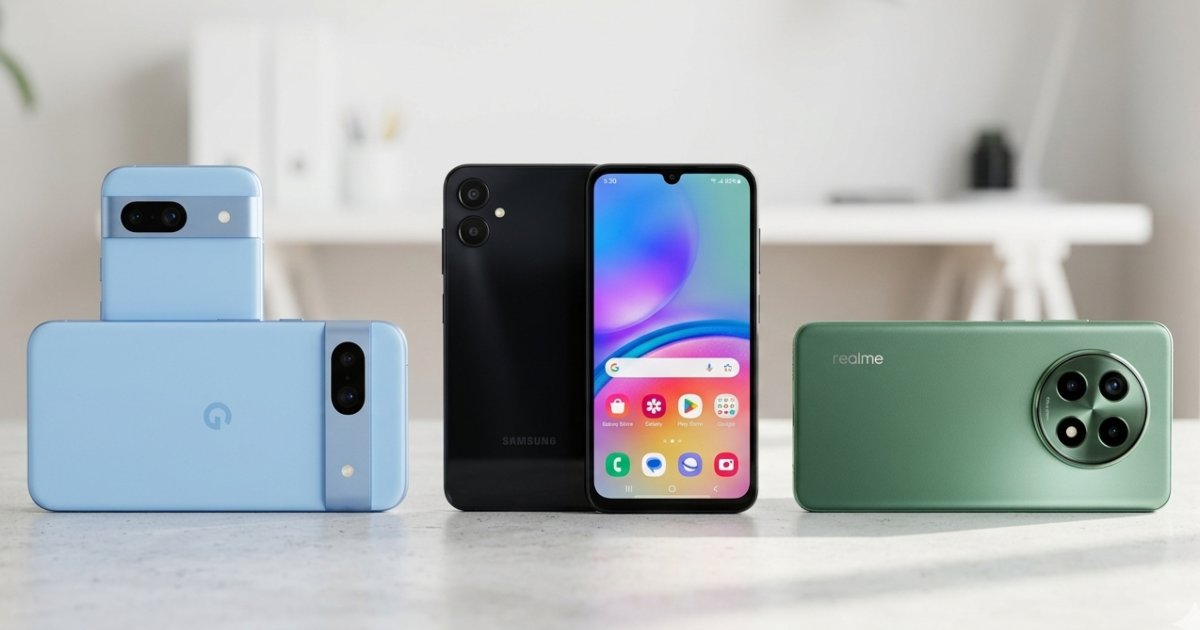
The definition of a budget phone has shifted. In 2026, we expect at least five years of software updates, high-refresh-rate OLED screens, and cameras that can handle 4K cinematic modes. Here are the champions of the mid-range market.
1. Google Pixel 10a: The AI King
Released in March 2026, the Pixel 10a remains the undisputed heavyweight champion of the budget world. While it retains the $499 price point, its internals have seen a massive jump.
-
Why it wins: It features the Tensor G4 chip, bringing Google’s full suite of Gemini AI tools to a cheaper device.
-
Standout Feature: For the first time in the A-series, Google has included Satellite SOS, allowing you to contact emergency services even without cellular coverage.
-
Software: 7 years of OS and security updates, ensuring this phone stays relevant until 2033.
2. Samsung Galaxy A37 5G: The Reliability Powerhouse
Samsung’s Galaxy A37 5G is the go-to for users who want a “mini-flagship” experience. Priced around $399, it bridges the gap between the ultra-budget A17 and the premium S-series.
-
Why it wins: A stunning 6.7-inch Super AMOLED+ display with a 120Hz refresh rate and 1,900 nits peak brightness.
-
Performance: Powered by the Exynos 1480, it handles multitasking with ease and includes “Awesome Intelligence” (Samsung’s mid-range AI suite) for photo editing and live translations.
3. Redmi Note 15 Pro: The Specs Monster
If you want the most “raw” hardware for every dollar spent, Xiaomi’s Redmi Note 15 Pro is unbeatable. In 2026, Xiaomi has pushed the boundaries of what a budget battery can do.
-
Why it wins: It packs a massive 6,500mAh Silicon-Carbon battery with 100W HyperCharge. You can go from 0% to 100% in roughly 40 minutes.
-
Camera: A 200MP AI-driven main sensor that uses multi-frame fusion to deliver night photos that rival $1,000 flagships.
4. Nothing Phone (4a): The Design Icon
Expected to follow the successful Phone (3a), the Nothing Phone (4a) continues the brand’s philosophy of “intentional tech.” It focuses on a clean UI and a transparent aesthetic that stands out in a sea of glass slabs.
-
Why it wins: Nothing OS 4.0 is arguably the cleanest Android skin in 2026, free of bloatware and heavily integrated with functional widgets.
-
Build: Uses a high-strength polycarbonate frame that is both lightweight and incredibly durable.
Key Trends Driving Budget Phones in 2026
When shopping for a phone this year, you’ll notice three major shifts that didn’t exist a couple of years ago:
-
On-Device AI (Edge AI): Unlike 2024, where AI lived in the cloud, 2026 budget phones use local NPUs to process voice and images. This means your data stays private and your assistant works offline.
-
Durability Standards: IP68 water resistance and Gorilla Glass 7i (specifically designed for mid-range durability) have become standard features.
-
Sustainability: Most 2026 budget models, especially the Pixel 10a, now use over 30% recycled materials, including recycled cobalt and tungsten.
2026 Budget Smartphone Comparison Table
| Feature | Google Pixel 10a | Samsung Galaxy A37 | Redmi Note 15 Pro |
| Price (Approx) | $499 | $399 | $350 – $400 |
| Display | 6.3″ pOLED (120Hz) | 6.7″ Super AMOLED+ | 6.8″ CrystalRes AMOLED |
| Processor | Tensor G4 | Exynos 1480 | Snapdragon 7s Gen 4 |
| Battery | 5,100 mAh | 5,000 mAh | 6,500 mAh |
| Charging | 30W Wired / 10W Qi | 45W Wired | 100W HyperCharge |
| Support | 7 Years Updates | 6 Years Updates | 4 Years Updates |
Buying Advice: What to Look for in 2026
Don’t get distracted by high megapixel counts or flashy colors. Focus on these three pillars to get a phone that lasts:
-
Software Longevity: In 2026, don’t buy a phone that offers less than 4 years of OS updates. Security is paramount as AI agents begin to handle our finances.
-
NPU Power: Check the “TOPS” (Trillions of Operations Per Second) rating of the processor. A higher NPU rating means smoother AI features like real-time video captions and smart replies.
-
Display Brightness: With 2026 screen technology, look for at least 1,500 nits of peak brightness so you can actually see your screen in direct sunlight.
Frequently Asked Questions (FAQs)
Q1: Is 8GB of RAM enough in 2026?
For most users, yes. However, as local AI models grow, 12GB of RAM is becoming the new sweet spot for heavy multitaskers. Many phones now offer “Virtual RAM” expansion to help with this.
Q2: Should I wait for the iPhone 17E (SE 4)?
If you prefer iOS, the iPhone 17E (Apple’s 2026 budget model) is a strong contender with the A19 chip. However, Android budget phones currently offer better displays (120Hz vs. Apple’s 60Hz) at the same price point.
Q3: Do budget phones in 2026 have 5G-Advanced?
Yes. All major releases in 2026 support 5G-Advanced (5.5G), which offers better indoor penetration and lower latency for gaming and AR applications.
Q4: Is wireless charging common in budget phones now?
It is becoming more common. The Pixel 10a has it, but many others (like the Galaxy A37 or Redmi Note 15 Pro) skip it to prioritize faster wired charging or better cameras.
Q5: Can budget phones play high-end games like Genshin Impact 3?
Yes, but you may need to run them on “Medium” settings. For a dedicated gaming experience, the Redmi Note 15 Pro with the Snapdragon 7s Gen 4 is your best budget bet.
Final Verdict
The best budget phone of 2026 depends on your priorities. If you want the best camera and AI, go for the Google Pixel 10a. If you want a large, beautiful screen and long-term reliability, the Samsung Galaxy A37 is the one. For raw power and insane battery life, the Redmi Note 15 Pro stands alone.

