

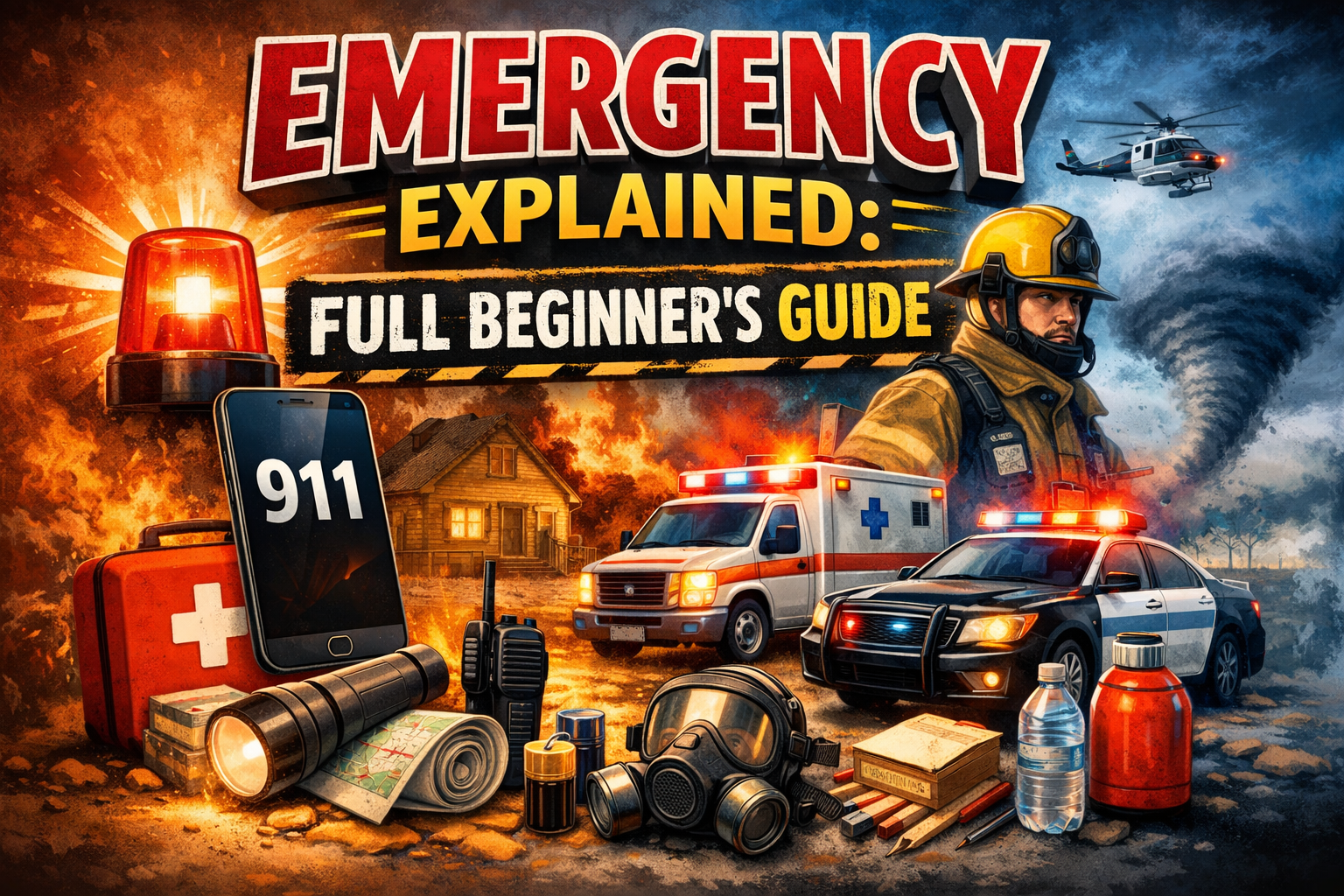
An emergency is an unplanned event that requires immediate response to avoid incident, injury, or additional danger. Emergencies can occur in public, in the office, on the road or at home. Recognizing what an emergency is and learning to respond quickly can reduce panic, and in certain typically life threatening situations, can even save a life.
In this elementary guide, we will break down the meaning of emergency and what that means in practical situations. The objective is to transform an emergency from a chaotic response to a situation in which you have the disposition to accurately respond.
What is an Emergency?
Emergency is a term that refers to instances that pose a threat to safety, health, and environment. These situations require immediate decisions and quick actions.
Through the casual use of the word “emergency,” we have adopted a system that rewards that use of the term. We see this word on logos that express an ’emergency’ state.
- In summary an emergency is an instantaneous event
- That requires immediate response
- That will result in a negative outcome if left unaddressed
What are the Common Emergencies?
Depending on the context, an emergency situation can vary. Nevertheless, there are universal kinds of emergencies.
1. Medical Emergencies
Cases that require immediate medical assistance like:
- Heart attacks
- Severe injury
- Difficulty in breathing
- Unconscious state
2. Natural disasters
An emergency caused by the environment like,
- Earthquake
- Floot
- Storm
- Heat wave
3. accidents
Unexpected incidences that are potentially harmful
- Road incident
- Work-related injuries
- Fires
4. Security Emergencies
Emergency situations that endanger lives
- Theft or robbery
- Violence or assault
- Terror-related incidents
Why Emergencies Require Immediate Action
Time is everything in an emergency. Even losing a few seconds can worsen the situation significantly.
For instance:
- In a medical emergency involving a heart attack, time is critical and can make a difference between life and death.
- In the case of fire, the ability to leave the place instantly can save injury or casualties.
- In natural disasters such as floods or earthquakes, acting quickly can minimize the risk.
For these reasons, knowing emergency response is a necessity.
How to Identify an Emergency
There are many stressful situations but not every situation is an emergency. An emergency includes:
- A situation that puts life or safety in danger
- A case of severe injury or illness
- An imminent situation
- A situation that you lose control of
A good rule of thumb is: If waiting makes it worse, it is likely an emergency.
The Power of Preparedness
The difference between a chaotic situation and a manageable one is your level of preparedness. While you can’t know every single thing that may happen, you can prepare for a lot of them.
1. Make an Emergency Plan
Every household and workplace should draw out a plan, including:
- Escape routes
- Meeting points
- Emergency contacts
2. Have an Emergency Kit
A simple kit should include:
- First aid supplies
- A flashlight
- Bottled water
- Medications
- A power bank
3. Know First Aid
You can learn to do an emergency procedure such as:
- CPR
- Treating a wound
- Burn management
- Assisting choking
4. Preserve Yourself
Panic can be the the biggest dangers. From calm thinking, you can
- Make better decisions.
- Avoid mistakes.
- Efficiently help others.
Example:
Think of a scenario where someone collapses in the street. Despite possible panic, a set individual would:
- Check to see if the person is responsive.
- Call for help.
- Do the first aid if possible.
- Wait for help to arrive.
And this, for sure, is a good sequence of actions.
The Importance of Being Aware
Being aware is the ability to detect possible ovecoming danger. A associate of dangers can be people losing their attention on prevention.
- A small kitchen fire can be a house fire
- Chest pain can be a heart attack
- Storm can be a Weather Alert
Being attentive and informed is the best prevention.
Response and Alert System
Now, response and alerting systems have been taken to the next level.
- Mobile Emergency Alerts
- GPS
- Hotlines
- Warning Systems
This leads to emergency response to have a better slavery than now.
Developing the Right Emergency-Preparedness Attitude
Being thorough in preparation is having the right tools and the right mindset. Someone who is emergency-ready:
- Thinks thoroughly in high-pressure situations
- Knows some foundational safety measures
- Is aware of potential danger and risk
- Provides assistance to others when safe and necessary
This mindset is cultivated through awareness and consistency.
Frequently Asked Questions (FAQs)
Q1. What is an emergency in the simplest terms?
A: An emergency is an event or situation requiring immediate action to alleviate potential harm.
Q2. What types of situations can be classified as emergencies?
A: Most emergencies can be classified as either a medical emergency, a natural disaster, or accident, or a crime in the form of a fire, violence, or attack.
Q3. How should one respond to a situation classified as an emergency?
A: While remaining composed, evaluate the situation, call for assistance, and employ the most immediate action, such as evacuation.
Q4. Why should people prepare for emergencies?
A: Preparedness among a group of people can reduce the occurrence or the worsening of a situation.
Q5. What should be in your emergency supply?
A: Basic emergency supply should include food and water, first aid tools, a torch, batteries, medicine, and a charged-up power bank.
Conclusion
An emergency (with E capitalized) is a critical situation requiring urgent care and action. Whether it is medical or natural or an accident, an emergency situation can be salvaged by the right, trained response.
This guide illustrates how unpredictable emergencies may be, and how their impact can be mitigated by preparation, awareness, and the right measures when faced with an emergency.
Ultimately, preparedness isn’t about anticipating catastrophe; rather, it’s about being equipped for whatever challenges life throws your way.

