

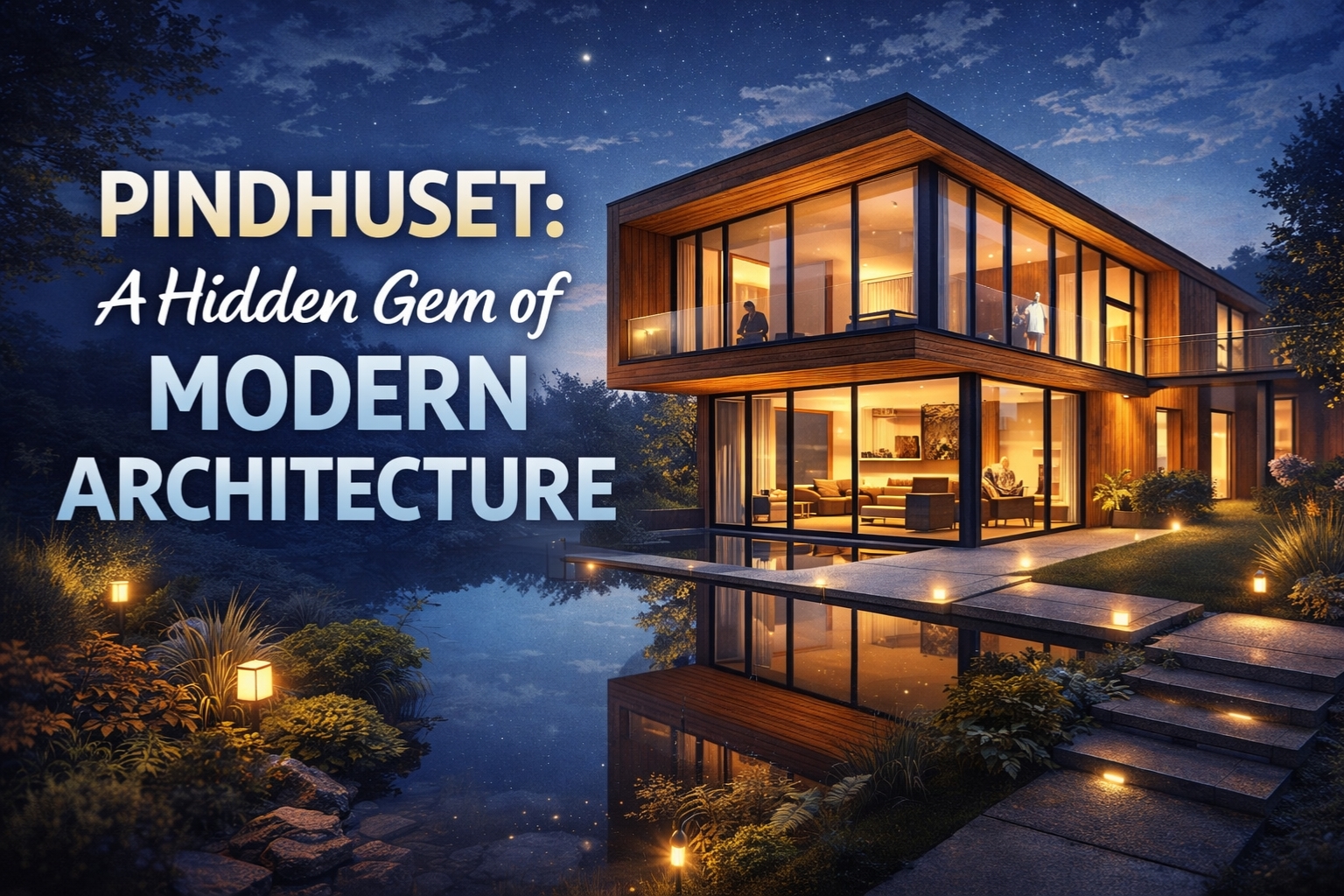
Pindhuset is a hidden gem that many travelers are oblivious to, tucked away in the scenic landscapes of Denmark. This unassuming building is the less-celebrated face of Scandinavian design, in contrast to the country’s more iconic architectural landmarks. No massive scale luxury booth or flamboyant display needed to catch the eye. Instead, it wins over with simplicity, harmony with nature and careful architectural expression.
Pindhuset is a microcosm of the modern Danish design philosophy: to create buildings not merely for somewhere, but rather some-where. It is a personal, soothing experience, even meditative — for those who find it.
A Hidden Gem in the Danish Countryside
Denmark has a renowned global identity for design culture, sustainable planning, and contemporary architecture. Copenhagen, for example, is awash with cool and clever buildings, waterside developments, and unique urban spaces. But behind the cities, an architectural identity that appreciates nature, silence and balance appears like a whisper.
Pindhuset is also yet another dimension of this world less known to many. Typically found in spots that are peaceful, like a forest, country side or near the ocean. The natural environment is an important part of your experiencing the facility. Instead of pushing into the scene aggressively, it floats seamlessly with its environment to just about feel like a part of everything from the land.
People seem to call Pindhuset a hidden gem. It is not heavily advertised as a tourist place, and this has preserved its tranquillity and untouched feel.
Architectural Philosophy: Simplicity and Purpose
Design of Pindhuset is highly influenced by Scandinavian minimalism. This architectural style dwelled on simplicity, comfort, and harmony with nature. The structure has a function to fulfil, Every detail in it is meaningful, not superfluous decor or superficial complexities.
The construction itself is based entirely on natural materials, mostly wood. Wood gives it warmth, texture and an organic feel. This no doubt also helps keep the structure looking naturally aged, with its appearance evolving along with its surroundings over time.
Another important component is glass, which serves to allow natural light into the building and establish a visual continuity between spaces inside and out. The large windows make residents constantly aware of nature, whether it is the sunlight or rain falling on trees in Autumn.
Pindhuset is a great case study for what contemporary architecture can do with restraint. Rather than bombarding the senses, it imbues a sense of clarity and calm.
Harmony Between Nature and Structure
The strong bond with the natural landscape is one of its most distinctive attributes at Pindhuset. We designed the configuration to revere landscapes rather than to refashion them. It is sited with as much of the site (including trees, slopes, and natural landforms) preserved as possible.
Earthy tones and natural material textures for the exterior design enable visual merging of the building with the landscape. A Pindhuset from afar does not loom, it integrates.
This balance is not just visual but full of emotions. A sense of peace comes over many visitors approached to or entering the structure. Going from the outside to the inside feels effortless: indeed, it is as if there is no division whatsoever.
Interior – Living in calmness and functionality
The same design philosophy follows through to within Pindhuset. The interior is characterized by a sense of openness, simplicity and natural light. Spaces are meant to be easy and clean like air, where people can move and think without obstruction.
Natural materials follow through indoors, where wood, stone and glass forge a consistent design language. Furniture is sparse but highly functional — carefully selected to avoid visual chaos and still keep it cosy.
Instead of cutting spaces up with heavy walls, the plan often employs gentle shifts in light, texture, or height. It gives a flowing experience across the structure.
The ambience inside also changes with the light throughout the day. The morning light is soft and fresh, the evening light warm and reflections. It is a living space, because nature and people are engaged in dynamic interaction.
Sustainability and Environmental Awareness
With sustainable architecture being an increasingly popular practice, Pindhuset is a testament to this notion. The design employs eco-friendly design principles that minimize its environmental impact.
By using smart design choices like natural ventilation, insulation and the optimal orientation of buildings, Energy efficiency is also achieved. Numerous large windows are simply located in various points, aligning with whatever angle of sunlight is being recorded to the maximum natural light exposure while limiting artificial energy usage.
This could mean locally sourced materials for construction, supporting regional economies — not to mention a lower carbon footprint when transportation is taken into account. Such an action does not only help in preserving the earth but also brings the building closer to its geographic location.
Moreover, materials are chosen that are not only durable but as well make it last long enough so few repairs or replacements needed.
Pindhuset, as an undetected place
The Pindhuset is not particularly well known, even though it has architectural beauty. Part of the reason is that it is located in much quieter, less touristy parts of Denmark. The design philosophy is another reason it does not focus on mass tourism.
Pindhuset provides an escape from the rest of the world — these places are purpose-engineered to enable all generations and tourists en masse, unlike most of the landmarks where crowds gather. It is an experience over popularity. Such limited exposure prevents over commercialising of its natural beauty and free from excessive crowds.
With so many travel opportunities getting shamelessly promoted and business-ized, Pindhuset reminds me that real beauty may be low-key.
The Experience of Visiting Pindhuset
Going to Pindhuset is more about being there than seeing any sights. It challenges people to take their time and notice what they see. The minimalist design and silence of the surroundings help set a reflective tone.
The interstitial space between indoor and outdoor is particularly compelling. Expansive glass incursions and aquascapes merge the natural backdrop with the interior.
Aside from where to stay, for mindful spaces architects, designers or travelers alike can find inspiration at the Pindhuset. It demonstrates how architecture evokes emotion and encourages a bond with nature.
Frequently Asked Questions (Q/A)
Q1. What is Pindhuset?
A: Pindhuset is a distinct structure located in Denmark, designed to highlight Scandinavian architectural beauty next to nature.
Q2. Why is Pindhuset a hidden gem?
A: It is a hidden gem because Pindhuset is a lesser-known structure, located in a calming nature-rich environment.
Q3. What building materials are incorporated in Pindhuset?
A: Natural building materials consistent with the values of sustainability include wood, stone, and glass.
Q4. What is the architectural significance of Pindhuset?
A: Pindhuset is modern Scandinavian Architecture because of the structures simplicity, use of eco-friendly, building materials, and design to integrate with nature.
Q5. Is Pindhuset open to tourists?
A: Pindhuset is not open to tourists, unless you are an architectural enthusiast.
Conclusion
Pindhuset is a perfect representation of modern scandinavian architecture done in simplicity, sustainability and harmony with nature. Rather than in splendour, it does so in humility and intentionality and respect for the environment.
As an unnoticed jewel in the Danish landscape, it embodies a type of architectural success best described with the adjectives humble, significant and contextual.
In a world, where complexity and scalability seem to be celebrated evermore, Pindhuset reminds us that so much beauty can also exist in simplicity. This is a perfect and classic example to demonstrate how architecture and nature are together in harmony.

