

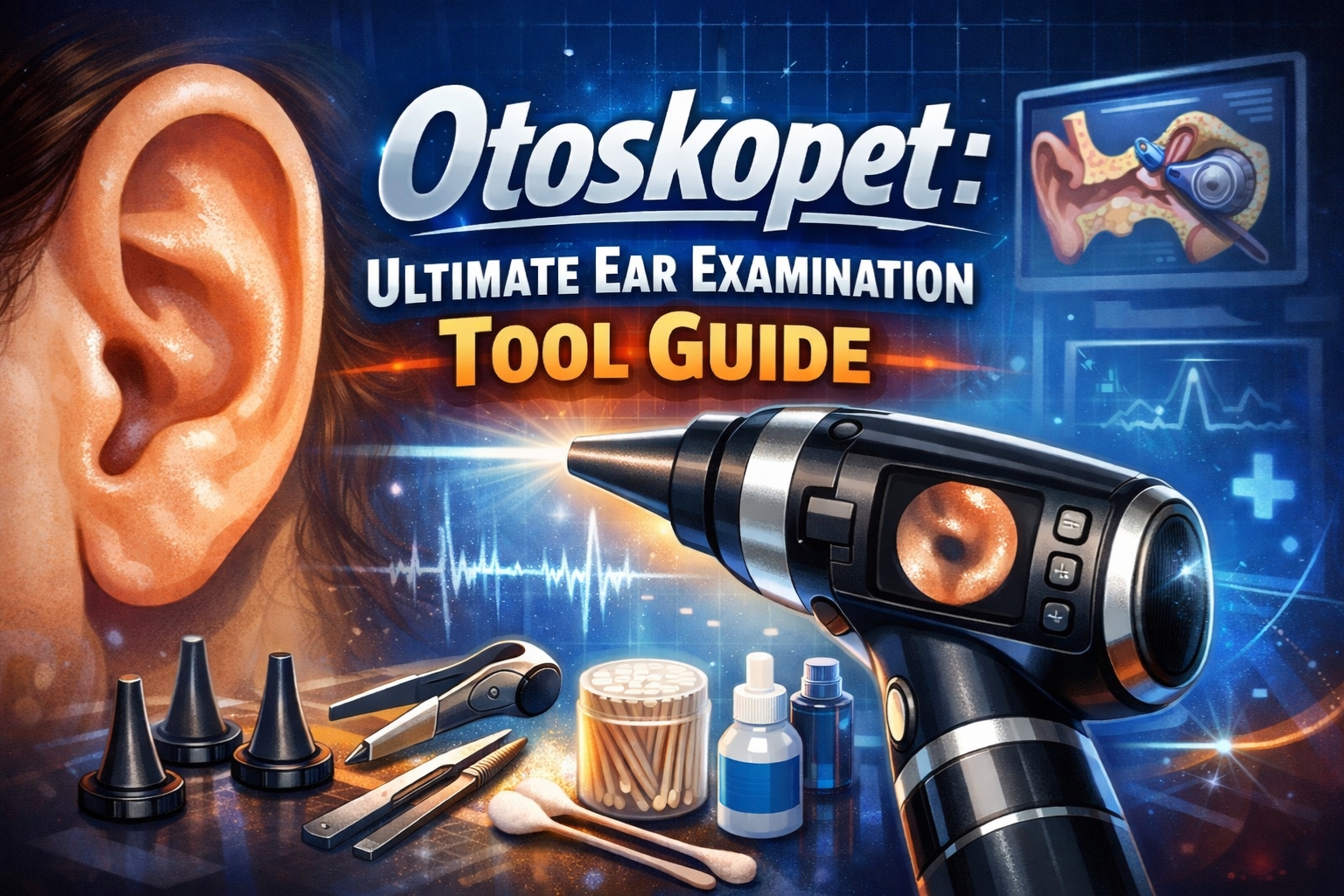
Otoskopet! The ear is a highly sensitive and intricate organ, and critical to one’s ability to hear and maintain balance. The ear should be examined regularly to diagnose conditions that could lead to infection, blockage, or other complications that may harm one’s hearing. Ear examination is as important as the tool used, and one example of such a tool is the otoscope, or the Otoskopet as some refer to it.
An otoscope is an ear examination tool that provides a view of the ear canal and the eardrum. This medical device utilizes a light source, a magnifying lens, and a speculum, which allows a health professional to do a thorough examination. Otoscopes can determine the presence of any of the following: ear infections, impacted earwax, perforations of the eardrum, or exhibition of otitis media, among other conditions.
Advancements in technology have transitioned otoscopes from a simple device that can be held in one’s hands to a sophisticated one that can be digital or smartphone compatible, which enhances visibility and the ability to identify conditions accurately.
Problem: Ear Examination Challenges
Although ear examination is very useful, many people, including some practitioners experience the following challenges:
- Insufficient visibility: The ear canal is narrow, and examining it can be very challenging without good lighting and proper magnifying techniques. Small infections and/ or wax impactions can be missed using traditional techniques.
- Misdiagnosis: Without good visualization, fluid, early stage infections, and perforations of the eardrum that are minor may go undetected.
- Patient discomfort: Inadequate examination tools, or poor technique can lead to pain, frustration, anxiety and in some cases, even revolt to the examination, particularly in the case of young children.
- Lack of documentation: Traditional otoskopet do not have documentation capabilities. This may hinder the care and education of patients, as well as complicate the follow-up care process.
The problems mentioned above call for an Ears examination tool that is efficient, easy to use, and precise.
Solution: Using Otoskopet Step by Step
The problems mentioned can be solved by an understanding of the steps involved in operating an otoscope. With the following guide, there should be no further questions.
Step 1: Select the Appropriate Otoscope
There are various types of otoscopes such as:
- Traditional Otoscopes: These are the most basic types, consisting of a light and magnifying lens.
- Digital Otoscopes: These ones are fancier and as a result more expensive. They have a camera that can transmit live images to a display on a phone or tablet.
- Pediatric Otoscopes: These are for the more younger populations and thus have smaller speculum sizes and shallower lighting for the smaller ears.
The choice of otoscope will be determined by the age of the patient as well as how often the otoscope will be used and if any documentation will be done.
Step 2: Get the Equipment Ready
- Make sure to only use a clean otoscope.
- Make sure to only use the speculum that is size is for the age group of the patient (small for children, medium or large for adults, etc.).
- Do not forget to check and change the batteries on the otoskopet if it is a digital one.
- Make sure to keep good hygiene by washing your hands and wearing gloves (if that is your preference).
Step 3: Get the Patient in Position
- Ask the patient to get comfortable in their seat.
- Adults should be asked to tilt their head a bit to the side opposite to the direction of the ear that is to be examined.
- Children should be asked to sit on their parent’s laps in order to make sure that they don’t get agitated.
Step 4: Start the Exam
- To straighten the ear canal, you will need to gently pull the outer ear up and back (for adults) and down and back (for children).
- Do not make sudden moves in order to insert the speculum.
- To view the ear canal and the tympanic membrane (eardrum), use the light and magnification features of the otoskopet.
- Look for:
- Wax buildups or foreign bodies
- Redness, swelling, or fluid behind the eardrum
- Perforations – Fluid scarring
- Infections or other abnormal discharge
Step 5: Interpret Findings and Take Notes
Record your observations in a chart or if using a digital otoskopet, record images and videos. Recommend the following if you notice any of the abnormal signs: – Earwax removal – Antibiotics for the infection – Ent referral for further management of complicated cases
Tips & Examples: Getting the Most Out of Otoskopet –
- Good Lighting: Make sure your light is bright and focused to reduce shadows and show the most detail.
- Staying Calm and Gentle: This is especially important for children or anxious patients.
- Use Regular Maintenance: Make sure you clean and disinfect the otoscope regularly to reduce the risk of cross-contamination.
- Documentation for Follow-Up: Digital otoscopes let you save photos to the patient’s record for improved follow-up and education.
- Practice Makes Perfect: The more you use it, the more accurate you’ll be, and the more confident you’ll be in your diagnosis.
- Combined Use with Other Tools: A tympanometer or an audiometer will provide you with more information to help you in your evaluation of the ear.
Example: A child has slightly discomfort in the ear and there is no swelling in the external ear. The practitioner digital otoskopet of the child and has noted a slightly early collection of fluid at the eardrum. This child was documented, and follow-up visits were planned with the child to avoid a severe infection.
Frequently Asked Questions (Q/A)
Q1: Can I use an otoscope at home?
A: Home use, otoscope use, is limited to the inspection of the ear, and the practitioner should be consulted for the diagnosis of an ear infection.
Q2: What is the difference between a traditional and digital otoscope?
A: The traditional otoscope is for direct inspection and the digital otoscope will allow for image capture and display.
Q3: How often should I check my ears?
A: There is no need for an ear inspection, however, if there is any discomfort, hearing impairment, or ear infection, an otoscope should be used.
Q4: Can an otoscope detect hearing loss?
A: Structural hearing loss can be determined by an otoscope due to ear wax, infection, etc. However, a hearing test is necessary for evaluating the presence of a hearing loss.
Q5: Is it safe to use an otoscope on children?
A: Yes, if the right technique is used, and the right size speculum is used. There are Pediatric otoscopes for this.
Conclusion
For any ear care professional, Otoskopet, or modern otoscope, is a must-have tool. It allows visualization of the ear canal and the ear drum, which aids in early diagnosis of possible abnormal conditions in the ear. Through technique and digital features, the practitioner can alleviate discomfort, reduce the possibility of a missed diagnosis, and keep an accurate history of the patient.
Designed for use by the clinician, the hospital-based or even the home care Otoskopet, will allow for the practitioner to extend the ear care service.

