

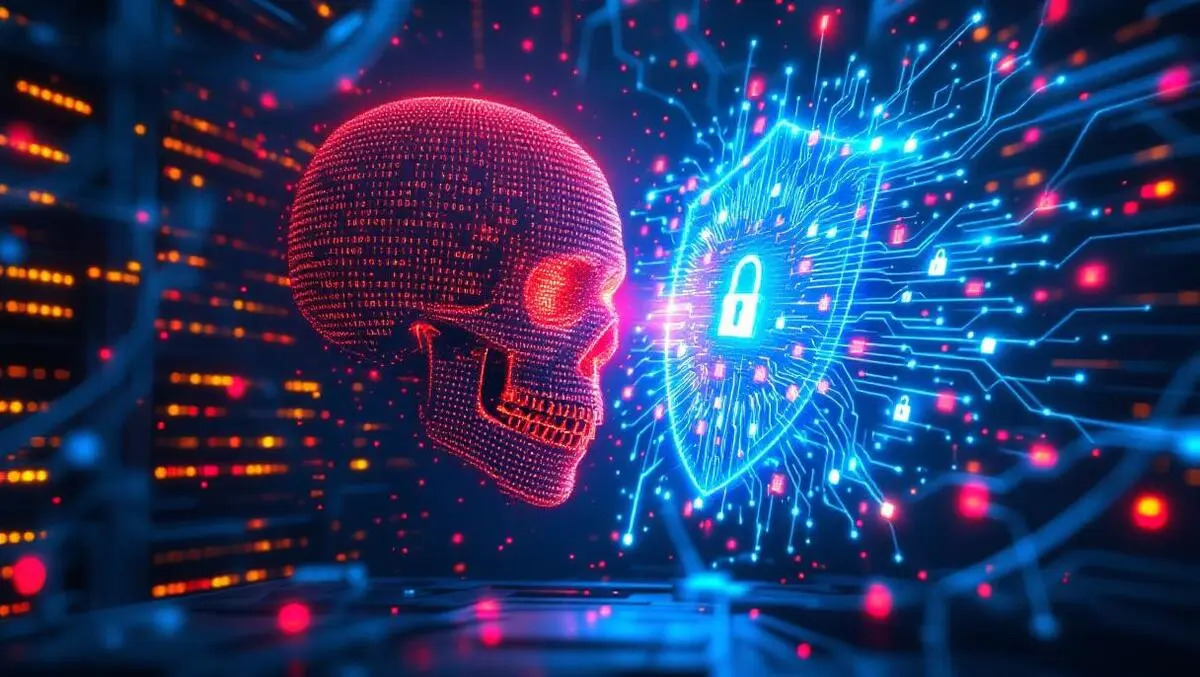
As we navigate through May 2026, the digital world has become a double-edged sword. On one side, AI agents are making our lives seamless. On the other, the “Dark AI” industry has turned into a multi-billion dollar shadow economy. We are no longer fighting human hackers; we are fighting algorithms that can evolve in real-time.
In this guide, we explore how AI is both the greatest threat and the strongest shield for your digital life this year.
The New Face of Threats: “Phishing 2.0” and Deepfakes
In 2024, you could spot a scam by looking for bad grammar or a suspicious link. In 2026, that is a thing of the past.
Generative Phishing now uses your own voice and social media history to create hyper-realistic scams. An AI can scrape your LinkedIn, Twitter, and even your voice from a 10-second YouTube clip to call your family or bank, sounding exactly like you.
The Rise of Autonomous Malware
Modern malware is now “context-aware.” Instead of attacking everything at once, it sits quietly on a device, observing your habits using AI, and only strikes when it detects a high-value transaction—such as when you open your crypto wallet or authorize a large bank transfer.
The Shield: How AI is Protecting Us in 2026
Thankfully, the defense is just as smart as the attack. We have moved into a period of Predictive Security.
1. Behavior-Based Authentication
Instead of just a password or a fingerprint, 2026 security systems use “Behavioral Biometrics.” The AI knows how you hold your phone, the speed at which you type, and even the way you move your mouse. If someone else tries to use your device, the AI detects the “rhythm mismatch” and locks the system instantly.
2. Zero-Knowledge Proofs (ZKP)
ZKP technology has become the gold standard for privacy. It allows you to prove your identity (e.g., that you are over 18 or that you have enough money in your bank) without actually revealing your date of birth or your bank balance.
Privacy in Your Pocket: The Rise of “Personal AI Clouds”
The biggest shift in 2026 is the rejection of “Big Tech Clouds.” People are moving their data to Personal AI Clouds—small, encrypted home servers (often part of the [DePIN Networks] we discussed earlier) that store all personal memories, medical records, and financial data.
By keeping your data on your own hardware, you eliminate the “honeypot” risk where a single hack at a major company like Google or Meta exposes billions of users.
Top Security-Focused AI Projects to Watch
If you are looking to invest in the “Defense” side of the 2026 tech boom, these categories are seeing the most growth:
| Category | Key Project Type | Why it Matters |
| Privacy Layers | ZK-Rollups | Keeps blockchain transactions anonymous. |
| Identity | Decentralized ID (DID) | Gives you control over your digital “Passport.” |
| Audit AI | Smart Contract Auditors | AI that hunts for bugs in code before hackers find them. |
5 Essential Steps to Protect Yourself in 2026
-
Use an AI-Powered Firewall: Standard firewalls are dead. Use a service that uses local machine learning to scan for “odd” data patterns.
-
Verify via “Human-Only” Channels: For large financial moves, always have a “Safe Word” or a physical meeting with the person involved to bypass voice-deepfakes.
-
Audit Your AI Permissions: Periodically check which “Agents” have access to your crypto wallets and bank accounts.
-
Adopt Hardware Security Modules (HSM): Physical keys like YubiKeys are more important than ever because they cannot be “deepfaked.”
-
Segment Your Digital Life: Keep your “Work AI,” “Financial AI,” and “Social AI” on separate accounts to prevent a cross-platform breach.
Frequently Asked Questions (FAQs)
Q1: Can an AI agent steal my seed phrase?
Only if you give it permission or store it in a digital format that the agent can read. In 2026, the #1 rule remains: Never type your seed phrase on a device connected to the internet.
Q2: Are biometrics (FaceID/Fingerprint) still safe?
They are safe for daily convenience, but for high-security tasks, they should be used in “Multi-Factor” setups. AI-generated 3D masks can occasionally fool older FaceID sensors.
Q3: What happens if my “Personal AI” gets hacked?
If your local AI is hacked, the damage is limited only to your data. This is why we recommend “Regular Encrypted Backups” to an offline, air-gapped hard drive once a month.
Q4: Is the government regulating AI scams?
Yes, 2026 saw the passing of the “Global AI Integrity Act,” which mandates that all AI-generated voices must contain a digital signature. However, “Dark AI” models from unregulated regions often ignore these laws.
Q5: Can I use AI to protect my crypto?
Yes! There are now “Guardian Agents” that monitor your wallet 24/7. If they see a suspicious transaction that doesn’t fit your usual pattern, they can “Freeze” the transaction for 10 minutes, giving you time to verify it.
Conclusion
In 2026, privacy is no longer a luxury; it is a fundamental survival skill. As AI becomes more integrated into our lives, the boundary between “User” and “Algorithm” is blurring. By staying informed about Zero-Knowledge Proofs, securing your DePIN nodes, and using Behavioral Authentication, you can enjoy the benefits of the AI revolution without becoming a victim of its dark side.

